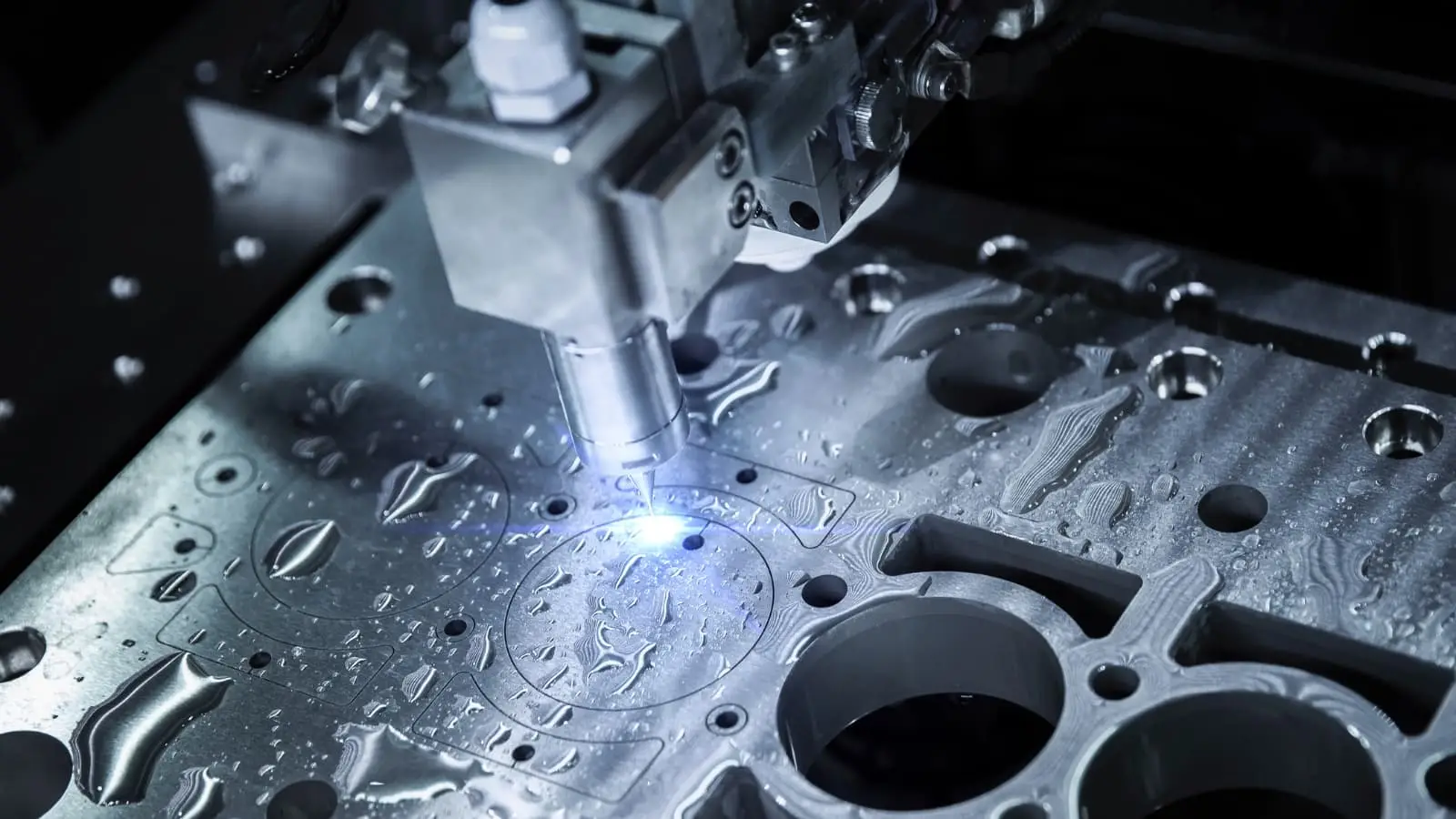
I recently spoke with the managing director of a precision engineering company in the West Midlands. I went into the conversation wanting to understand a fairly simple thing: what sort of work would they genuinely like me to bring them?
I had already done my homework. Their published capabilities included CNC milling, turning, grinding, assembly and specialist processes. They worked in demanding sectors and appeared capable of handling technically difficult components.
From the outside, it would have been easy to conclude that almost any complex machining enquiry was potentially suitable.
The conversation showed me why that conclusion would have been wrong.
A capability list only tells you part of the story
A machine shop may be technically capable of making a component without that component being a good commercial or operational fit.
The shop I spoke with has broad machining capability and experienced people. But it is not trying to compete for every possible job. Its strengths lie in small-to-medium production runs of complex components, particularly where skilled machinists, process control and experience genuinely matter.
That is very different from saying, “Send us anything that needs CNC machining.”
A one-off prototype with an extremely short deadline might be possible in theory, but disruptive in practice. A large repetitive run may be machinable, but better suited to a heavily automated shop operating around the clock. A technically interesting enquiry may still be unattractive if it is immature, poorly specified or likely to become a competition based purely on price.
This means that matching engineering work cannot be reduced to a checklist of machines and materials.
The real matching criteria
Technical capability is still the starting point. The shop must be able to work with the material, tolerances, geometry and processes involved.
But a useful match also depends on:
- The type and complexity of the component
- Prototype, one-off or production work
- Batch quantity
- Required lead time
- The shop’s current capacity
- The industries and quality requirements involved
- How well developed the design is
- Whether the customer is buying primarily on price, speed, capability or reliability
Two shops with very similar equipment can therefore respond completely differently to the same RFQ.
One may see it as an ideal job. The other may see an awkward interruption to its production schedule.
Neither shop is necessarily right or wrong. They are simply set up for different work.
A quick no can be valuable
This conversation also changed how I think about a declined RFQ.
When you are trying to generate work for engineering companies, a “no bid” can initially feel like failure. But a quick, clear no is far more useful than a vague maybe followed by a week of silence.
It allows the enquiry to move to a more suitable shop while the customer is still engaged. It also teaches me something about the partner’s real preferences, which makes the next match more accurate.
The problem is not that every shop declines some work. The problem is sending poorly matched enquiries repeatedly, or allowing unsuitable RFQs to sit unanswered while the customer waits.
Better client acquisition starts with understanding the operation
My own background is in client acquisition: generating enquiries and turning them into commercial opportunities for businesses.
I became interested in precision engineering because I have always been drawn to systems, how things work and how things are made. But working in this sector is reinforcing an important lesson: effective client acquisition cannot sit apart from operations.
It is not enough to generate a lead and pass it on.
To create something genuinely useful, I need to understand what each shop is well set up for, what it actively wants more of and what will waste its time. I also need to qualify the customer’s requirements properly before making an introduction.
That does not mean pretending to be the engineer. The machinist remains the expert on how the part should be made. My role is to improve the quality of the opportunity before it reaches the shop and to connect it with the people most likely to want it.
The aim is not more RFQs. It is better-fit RFQs.
Volume on its own is not the goal.
If a machine shop has to review ten unsuitable drawings to find one worthwhile opportunity, the lead-generation process is creating work rather than value. The same is true for customers who are passed from one unsuitable supplier to another.
The better model is to build a clear working profile of each engineering partner:
- What an ideal job looks like
- What should not be sent
- Normal lead times
- Preferred batch sizes
- Materials and processes
- Sectors and quality requirements
- How quickly the shop can give an initial yes, no or request for more information
That profile will never make every match perfect. Manufacturing is too varied, and capacity changes constantly. But it should improve the odds considerably.
My biggest takeaway from the conversation was simple:
The right question is not only, “Can this shop make the part?” It is, “Does this job fit the way this shop is built to work?”
That distinction is becoming central to how I’m building Birmingham CNC Machining, and, I believe, to how a useful engineering lead-generation and matching service should operate.
Continue the Journey
This is one entry in an ongoing journal documenting the process of building Birmingham CNC Machining in public. If you are sourcing precision engineering work in Birmingham or the West Midlands, that is where the actual platform lives.
Visit Birmingham CNC MachiningMore from the Journal
All entries
18 August 2026 · 5 min read
What Early Precision Engineering Enquiries Are Teaching Me About Better RFQ Matching
7 August 2026 · 6 min read
What Precision Engineering Companies Need Before They Can Quote Your Project
31 July 2026 · 5 min read
Why More RFQs Aren’t Always Better for Precision Engineering Companies
21 July 2026 · 6 min read
What I’m Learning About Choosing the Right Precision Engineering Company
29 June 2026 · 4 min read